Archaic Words and the Authorized Version
Preface

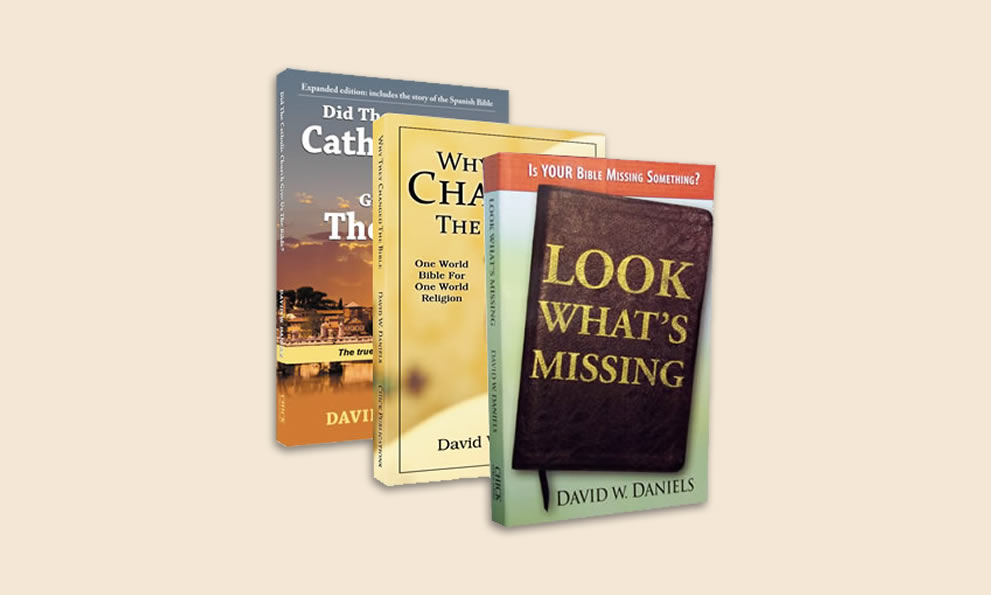
Picture of Book Cover
©1996 by Laurence M. Vance
Reproduced by permission.

The Authorized Version of the Holy Bible, which originally appeared in 1611, is the best-selling, most read, most loved, and most revered book in history. This is beyond dispute. But doesn't the Authorized Version contain archaic words? Certainly. Should we therefore replace it with something else? Certainly not. This is what is disputed.

Since the publication of the Authorized Version in 1611, a steady stream of new and updated English Bibles have appeared. Although many accusations have been hurled at the Authorized Version down through the years in regards to the merit of its underlying Greek text, its many supposed mistranslations, and the character of its namesake, every new English translation since 1611 has charged the Authorized Version with having archaic words that render it unintelligible, difficult, or misleading. But this charge is starting to wear thin, for every six months a new English translation of the Bible appears on the market with the claim that its modern, up-to-date, contemporary language is needed to make the Bible more understandable. Nevertheless, it is apparent that the Authorized Version does contain some archaic words that need explanation.

This book provides an explicit and comprehensive examination of every word in the Authorized Version of the Bible that has been deemed archaic, obsolete, antiquated, or otherwise outmoded. The result is both a fascinating and encyclopedic study of words - their meaning, derivation, usage, and significance. Two things about the title of the book require explanation. The word archaic, as it is employed in this book, is painted with the same broad brush that is used to paint the Authorized Version with the charge of being archaic. And secondly, it is not just the archaic words in the Authorized Version that we are interested in, for there are not that many of them, it is archaic words and the Authorized Version that we are concerned with.

The thesis of this seminal work is that the Authorized is no more archaic than daily newspapers, current magazines, and modern Bible versions. To further supplement the work and to substantiate the underlying thesis, reference will not only be made to various newspapers and magazines, but to contemporary Bible versions like the New King James Version, the New International Version, the New American Standard Bible, and the New Revised Standard Version. Ample evidence as to the inconsistency of modern versions will be presented throughout the text and summarized in appendixes.

It is the contention of this book that the Authorized Version is the Bible for English speaking Christians and the standard by which all other versions should be judged. Just as a certain vocabulary is necessary to understand science, medicine, engineering, or computers, so to learn and understand the Bible one must be familiar with its vocabulary instead of dragging it down to one's own level. And just as no one revises Shakespeare or Milton, but instead learns the vocabulary necessary to understand those particular works, so every man who desires to read and understand the Bible must first become acquainted with the vocabulary of the Authorized Version rather than revise it. Therefore, this book is unique in that it seeks neither to criticize nor to correct the text of the Authorized Version.

Return to Archaic Words and the Authorized Version