
Hasn't the King James Bible been revised?
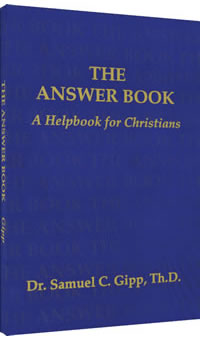
From "The Answer Book" ©1989 Samuel C. Gipp. Reproduced by permission
QUESTION: Haven't there been several revisions of the King James Bible since 1611?
ANSWER: No. There have been several editions but no revisions.
EXPLANATION: One of the last ditch defenses of a badly shaken critic of the Authorized Version 1611 is the "revision hoax." They run to this seeming fortress in an attempt to stave off ultimate defeat by their opponents who overwhelm their feeble arguments with historic facts, manuscript evidence and to obvious workings of the Holy Spirit. Once inside, they turn self-confidently to their foes and ask with a smug look, "Which King James do you use, the 1611 or the 1629 or perhaps the 1769?" The shock of this attack and the momentary confusion that results usually allows them time to make good their escape.
Unfortunately, upon entering their castle and closing the door behind them they find that their fortress has been systematically torn down, brick by brick, by a man with the title of Dr. David F. Reagan.
Dr. Reagan pastors the Trinity Baptist Temple in Knoxville, Tennessee. He has written a devastating exposé on the early editions of the King James Bible entitled "The King James Version of 1611. The Myth of Early Revisions."
Dr. Reagan has done an excellent job of destroying the last stronghold of Bible critics. I see neither a way, nor a reason to try to improve on his finding. So I have secured his permission to reproduce his pamphlet in its entirety.
THE KING JAMES VERSION OF 1611
THE MYTH OF EARLY REVISIONS
Introduction
Men have been "handling the word of God deceitfully" (II Cor. 4:2) ever since the devil first taught Eve how. From Cain to Balaam, from Jehudi to the scribes and Pharisees, from the Dark Age theologians to present-day scholars, the living words of the Almighty God have been prime targets for man's corrupting hand. The attacks on the Word of God are threefold: addition, subtraction, and substitution. From Adam's day to the computer age, the strategies have remained the same. There is nothing new under the sun.
One attack which is receiving quite a bit of attention these days is a direct attack on the Word of God as preserved in the English language: the King James Version of 1611. The attack referred to is the myth which claims that since the King James Version has already been revised four times, there should be and can be no valid objection to other revisions. This myth was used by the English Revisers of 1881 and has been revived in recent years by Fundamentalist scholars hoping to sell their latest translation. This book is given as an answer to this attack. The purpose of the material is not to convince those who would deny this preservation but to strengthen the faith of those who already believe in a preserved English Bible.
One major question often arises in any attack such as this. How far should we go in answering the critics? If we were to attempt to answer every shallow objection to the infallibility of the English Bible, we would never be able to accomplish anything else. Sanity must prevail somewhere. As always, the answer is in God's Word. Proverbs 26:4-5 states: Answer not a fool according to his folly, lest thou also be like unto him. Answer a fool according to his folly, lest he be wise in his own conceit.
Obviously, there are times when a foolish query should be ignored and times when it should be met with an answer. If to answer the attack will make you look as foolish as the attacker, then the best answer is to ignore the question. For instance, if you are told that the Bible cannot be infallible because so-and-so believes that it is, and he is divorced, then you may safely assume that silence is the best answer. On the other hand, there are often questions and problems that, if true, would be serious. To ignore these issues would be to leave the Bible attacker wise in his own conceit. I believe that the question of revisions to the King James Version of 1611 is a question of the second class. If the King James Version has undergone four major revisions of its text, then to oppose further revisions on the basis of an established English text would truly be faulty. For this reason, this attack should and must be answered. Can the argument be answered? Certainly! That is the purpose of this book.
I - THE PRINTING CONDITIONS OF 1611
If God did preserve His Word in the English language through the Authorized Version of 1611 (and He did), then where is our authority for the infallible wording? Is it in the notes of the translators? Or is it to be found in the proof copy sent to the printers? If so, then our authority is lost because these papers are lost. But, you say, the authority is in the first copy which came off the printing press. Alas, that copy has also certainly perished. In fact, if the printing of the English Bible followed the pattern of most printing jobs, the first copy was probably discarded because of bad quality. That leaves us with existing copies of the first printing. They are the ones often pointed out as the standard by which all other King James Bibles are to be compared. But are they? Can those early printers of the first edition not be allowed to make printing errors? We need to establish one thing from the outset. The authority for our preserved English text is not found in any human work. The authority for our preserved and infallible English text is in God! Printers may foul up at times and humans will still make plenty of errors, but God in His power and mercy will preserve His text despite the weaknesses of fallible man. Now, let us look at the pressures on a printer in the year of 1611.
Although the printing press had been invented in 1450 by Johann Gutenburg in Germany (161 years before the 1611 printing), the equipment used by the printer had changed very little. Printing was still very slow and difficult. All type was set by hand, one piece at a time (that's one piece at a time through the whole Bible), and errors were an expected part of any completed book. Because of this difficulty and also because the 1611 printers had no earlier editions from which to profit, the very first edition of the King James Version had a number of printing errors. As shall later be demonstrated, these were not the sort of textual alterations which are freely made in modern bibles. They were simple, obvious printing errors of the sort that can still be found at times in recent editions even with all of the advantages of modern printing. These errors do not render a Bible useless, but they should be corrected in later editions.
The two original printings of the Authorized Version demonstrate the difficulty of printing in 1611 without making mistakes. Both editions were printed in Oxford. Both were printed in the same year: 1611. The same printers did both jobs. Most likely, both editions were printed on the same printing press. Yet, in a strict comparison of the two editions, approximately 100 textual differences can be found. In the same vein the King James critics can find only about 400 alleged textual alterations in the King James Version after 375 years of printing and four so-called revisions! Something is rotten in Scholarsville! The time has come to examine these revisions."
11 - THE FOUR SO-CALLED REVISIONS
OF THE 1611 KJV
Much of the information in this section is taken from a book by F.H.A. Scrivener called The Authorized Edition of the English Bible (1611), Its Subsequent Reprints and Modern Representatives. The book is as pedantic as its title indicates. The interesting point is that Scrivener, who published this book in 1884, was a member of the Revision Committee of 1881. He was not a King James Bible believer, and therefore his material is not biased toward the Authorized Version.
In the section of Scrivener's book dealing with the KJV "revisions," one initial detail is striking. The first two so-called major revisions of the King James Bible occurred within 27 years of the original printing. (The language must have been changing very rapidly in those days.) The 1629 edition of the Bible printed in Cambridge is said to have been the first revision. A revision it was not, but simply a careful correction of earlier printing errors. Not only was this edition completed just eighteen years after the translation, but two of the men who participated in this printing, Dr. Samuel Ward and John Bois, had worked on the original translation of the King James Version. Who better to correct early errors than two who had worked on the original translation! Only nine years later and in Cambridge again, another edition came out which is supposed to have been the second major revision. Both Ward and Bois were still alive, but it is not known if they participated at this time. But even Scrivener, who as you remember worked on the English Revised Version of 1881, admitted that the Cambridge printers had simply reinstated words and clauses overlooked by the 1611 printers and amended manifest errors. According to a study which will be detailed later, 72% of the approximately 400 textual corrections in the KJV were completed by the time of the 1638 Cambridge edition, only 27 years after the original printing!
Just as the first two so-called revisions were actually two stages of one process: the purification of early printing errors, so the last two so-called revisions were two stages in another process: the standardization of the spelling, These two editions were only seven years apart (1762 and 1769) with the second one completing what the first had started. But when the scholars are numbering revisions, two sounds better than one. Very few textual corrections were necessary at this time. The thousands of alleged changes are spelling changes made to match the established correct forms. These spelling changes will be discussed later. Suffice it to say at this time that the tale of four major revisions is truly a fraud and a myth. But you say, there are still changes whether they be few or many. What are you going to do with the changes that are still there? Let us now examine the character of these changes.
III - THE SO-CALLED THOUSANDS
OF CHANGES
Suppose someone were to take you to a museum to see an original copy of the King James Version. You come to the glass case where the Bible is displayed and look down at the opened Bible through the glass. Although you are not allowed to flip through its pages, you can readily tell that there are some very different things about this Bible from the one you own. You can hardly read its words, and those you can make out are spelled in odd and strange ways. Like others before you, you leave with the impression that the King James Version has undergone a multitude of changes since its original printing in 1611. But beware, you have just been taken by a very clever ploy. The differences you saw are not what they seem to be. Let's examine the evidence.
Printing Changes
For proper examination, the changes can be divided into three kinds: printing changes, spelling changes, and textual changes. Printing changes will be considered first. The type style used in 1611 by the KJV translators was the Gothic Type Style. The type style you are reading right now and are familiar with is Roman Type. Gothic Type is sometimes called Germanic because it originated in Germany. Remember, that is where printing was invented. The Gothic letters were formed to resemble the hand-drawn manuscript lettering of the Middle Ages. At first, it was the only style in use. The Roman Type Style was invented fairly early, but many years passed before it became the predominate style in most European countries. Gothic continued to be used in Germany until recent years. In 1611 in England, Roman Type was already very popular and would soon supersede the Gothic. However, the original printers chose the Gothic Style for the KJV because it was considered to be more beautiful and eloquent than the Roman. But the change to Roman Type was not long in coming. In 1612, the first King James Version using Roman Type was printed. Within a few years, all the bibles printed used the Roman Type Style.
Please realize that a change in type style no more alters the text of the Bible than a change in format or type size does. However, the modern reader who has not become familiar with Gothic can find it very difficult to understand. Besides some general change in form, several specific letter changes need to be observed. For instance, the Gothic s looks like the Roman s when used as a capital letter or at the end of a word. But when it is used as a lower case s at the beginning or in the middle of a word, the letter looks like our f. Therefore, also becomes alfo and set becomes fet. Another variation is found in the German v and u. The Gothic v looks like a Roman u while the Gothic u looks like the Roman v. This explains why our w is called a double-u and not a double-v. Sound confusing? It is until you get used to it. In the 1611 edition, love is loue, us is vs, and ever is euer. But remember, these are not even spelling changes. They are simply type style changes. In another instance, the Gothic j looks like our i. So Jesus becomes Iefus (notice the middle s changed to f) and joy becomes ioy. Even the Gothic d with the stem leaning back over the circle in a shape resembling that of the Greek Delta. These changes account for a large percentage of the "thousands" of changes in the KJV, yet they do no harm whatsoever to the text. They are nothing more than a smokescreen set up by the attackers of our English Bible.
Spelling Changes
Another kind of change found in the history of the Authorized Version are changes of orthography or spelling. Most histories date the beginning of Modern English around the year 1500. Therefore, by 1611 the grammatical structure and basic vocabulary of present-day English had long been established. However, the spelling did not stabilize at the same time. In the 1600's spelling was according to whim. There was no such thing as correct spelling. No standards had been established. An author often spelled the same word several different ways, often in the same book and sometimes on the same page. And these were the educated people. Some of you reading this today would have found the 1600's a spelling paradise. Not until the eighteenth century did the spelling begin to take a stable form. Therefore, in the last half of the eighteenth century, the spelling of the King James Version of 1611 was standardized.
What kind of spelling variations can you expect to find between your present edition and the 1611 printing? Although every spelling difference cannot be categorized, several characteristics are very common. Additional e's were often found at the end of the words such as feare, darke, and beare. Also, double vowels were much more common than they are today. You would find ee, bee, and mooued instead of me, be, and moved. Double consonants were also much more common. What would ranne, euill, and ftarres be according to present-day spelling? See if you can figure them out. The present-day spellings would be ran, evil, and stars. These typographical and spelling changes account for almost all of the so-called thousands of changes in the King James Bible. None of them alter the text in any way. Therefore they cannot be honestly compared with thousands of true textual changes which are blatantly made in the modern versions.
Textual Changes
Almost all of the alleged changes have been accounted for. We now come to the question of actual textual differences between our present editions and that of 1611. There are some differences between the two, but they are not the changes of a revision. They are instead the correction of early printing errors. That this is a fact may be seen in three things: (1) the character of the changes, (2) the frequency of the changes throughout the Bible, and (3) the time the changes were made. First, let us look at the character of the changes made from the time of the first printing of the Authorized English Bible.
The changes from the 1611 edition that are admittedly textual are obviously printing errors because of the nature of these changes. They are not textual changes made to alter the reading. In the first printing, words were sometimes inverted. Sometimes a plural was written as singular or visa versa. At times a word was miswritten for one that was similar. A few times a word or even a phrase was omitted. The omissions were obvious and did not have the doctrinal implications of those found in modern translations. In fact, there is really no comparison between the corrections made in the King James text and those proposed by the scholars of today.
F.H.A. Scrivener, in the appendix of his book, lists the variations between the 1611 edition of the KJV and later printings. A sampling of these corrections is given below. In order to be objective, the samples give the first textual correction on consecutive left hand pages of Scrivener's book. The 1611 reading is given first; then the present reading; and finally, the date the correction was first made.
1 this thing - this thing also (1638)
2 shalt have remained - ye shall have remained (1762)
3 Achzib, nor Helbath, nor Aphik - of Achzib, nor of Helbath,
nor of Aphik (1762)
4 requite good - requite me good (1629)
5 this book of the Covenant - the book of this covenant (1629)
6 chief rulers - chief ruler (1629)
7 And Parbar - At Parbar (1638)
8 For this cause - And for this cause (1638)
9 For the king had appointed - for so the king had appointed
(1629)
10 Seek good - seek God (1617)
11 The cormorant - But the cormorant (1629)
12 returned - turned (1769)
13 a fiery furnace - a burning fiery furnace (1638)
14 The crowned - Thy crowned (1629)
15 thy right doeth - thy right hand doeth (1613)
16 the wayes side - the way side (1743)
17 which was a Jew - which was a Jewess (1629)
18 the city - the city of the Damascenes (1629)
19 now and ever - both now and ever (1638)
20 which was of our father's - which was our fathers (1616)
Before your eyes are 5% of the textual changes made in the King James Version in 375 years. Even if they were not corrections of previous errors, they would be of no comparison to modern alterations. But they are corrections of printing errors, and therefore no comparison is at all possible. Look at the list for yourself and you will find only one that has serious doctrinal implications. In fact, in an examination of Scrivener's entire appendix, it is the only variation found by this author that could be accused of being doctrinal. I am referring to Psalm 69:32 where the 1611 edition has "seek good" when the Bible should have read "seek God." Yet, even with this error, two points demonstrate that this was indeed a printing error. First, the similarity of the words "good" and "God" in spelling shows how easily a weary type setter could misread the proof and put the wrong word in the text. Second, this error was so obvious that it was caught and corrected in the year 1617, only six years after the original printing and well before the first so-called revision. The myth that there are several major revisions to the 1611 KJV should be getting clearer. But there is more.
Not only does the character of the changes show them to be printing errors, so does their frequency. Fundamentalist scholars refer to the thousands of revisions made to the 1611 as if they were on a par with the recent bible versions. They are not. The overwhelming majority of them are either type style or spelling changes. The few which do remain are clearly corrections of printing errors made because of the tediousness involved in the early printing process. The sample list given above will demonstrate just how careful Scrivener was in listing all the variations. Yet, even with this great care, only approximately 400 variations are named between the 1611 edition and modern copies. Remember that there were 100 variations between the first two Oxford editions which were both printed in 1611. Since there are almost 1200 chapters in the Bible, the average variation per chapter (after 375 years) is one third, i.e., one correction per every three chapters. These are changes such as "chief rulers" to "chief ruler" and "And Parbar" to "At Parbar." But there is yet one more evidence that these variations are simply corrected printing errors: the early date at which they were corrected.
The character and frequency of the textual changes clearly separate them from modern alterations. But the time the changes were made settles the issue absolutely. The great majority of the 400 corrections were made within a few years of the original printing. Take, for example, our earlier sampling. Of the twenty corrections listed, one was made in 1613, one in 1616, one in 1617, eight in 1629, five in 1638, one in 1743, two in 1762, and one in 1769. That means that 16 out of 20 corrections, or 80%, were made within twenty-seven years of the 1611 printing. That is hardly the long drawn out series of revisions the scholars would have you to believe. In another study made by examining every other page of Scrivener's appendix in detail, 72% of the textual corrections were made by 1638. There is no "revision" issue.
The character of the textual changes is that of obvious errors. The frequency of the textual changes is sparse, occurring only once per three chapters. The chronology of the textual changes is early with about three fourths of them occurring within twenty-seven years of the first printing. All of these details establish the fact that there were no true revisions in the sense of updating the language or correcting translation errors. There were only editions which corrected early typographical errors. Our source of authority for the exact wording of the 1611 Authorized Version is not in the existing copies of the first printing. Our source of authority for the exact wording of our English Bible is in the preserving power of Almighty God. Just as God did not leave us the original autographs to fight and squabble over, so He did not see fit to leave us the proof copy of the translation. Our authority is in the hand of God as always. You can praise the Lord for that!
IV - CHANGES IN THE BOOK OF ECCLESIASTES
An in-depth study of the changes made in the book of Ecclesiastes would help to illustrate the principles stated above. The author is grateful to Dr. David Reese of Millbrook, Alabama, for his work in this area. By comparing a 1611 reprint of the original edition put out by Thomas Nelson & Sons with recent printing of the King James Version, Dr. Reese was able to locate four variations in the book of Ecclesiastes. The reference is given first; then the text of the Thomas Nelson 1611 reprint. This is followed by the reading of the present editions of the 1611 KJV and the date the change was made.
1 1:5 the place - his place (1638)
2 2:16 shall be - shall all be (1629)
3 8:17 out, yea further - out, yet he shall not find it; yea farther
(1629)
4 11: 17 thing is it - thing it is (?)
Several things should be noted about these changes. The last variation ("thing is it" to "thing it is") is not mentioned by Scrivener who was a very careful and accurate scholar. Therefore, this change may be a misprint in the Thomas Nelson reprint. That would be interesting. The corrected omission in chapter eight is one of the longest corrections of the original printing. But notice that it was corrected in 1629. The frequency of printing errors is average (four errors in twelve chapters). But the most outstanding fact is that the entire book of Ecclesiastes reads exactly like our present editions without even printing errors by the year 1638. That's approximately 350 years ago. By that time, the Bible was being printed in Roman type. Therefore, all (and I mean all) that has changed in 350 years in the book of Ecclesiastes is that the spelling has been standardized! As stated before, the main purpose of the 1629 and 1638 Cambridge editions was the correction of earlier printing errors. And the main purpose of the 1762 and 1769 editions was the standardization of spelling.
V - THE SO-CALLED JUSTIFICATION
FOR OTHER REVISIONS
Maybe now you see that the King James Version of 1611 has not been revised but only corrected. But why does it make that much difference? Although there are several reasons why this issue is important, the most pressing one is that fundamentalist scholars are using this myth of past revisions to justify their own tampering with the text. The editors of the New King James Version have probably been the worst in recent years to use this propaganda ploy. In the preface of the New King James they have stated, "For nearly four hundred years, and throughout several revisions of its English form, the King James Bible has been deeply revered among the English-speaking peoples of the world. "In the midst of their flowery rhetoric, they strongly imply that their edition is only a continuation of the revisions that have been going on for the past 375 years. This implication, which has been stated directly by others, could not be more false. To prove this point, we will go back to the book of Ecclesiastes.
An examination of the first chapter in Ecclesiastes in the New King James Version reveals approximately 50 changes from our present edition. In order to be fair, spelling changes (cometh to comes; labour to labor; etc.) were not included in this count. That means there are probably about 600 alterations in the book of Ecclesiastes and approximately 60,000 changes in the entire Bible. If you accuse me of including every recognizable change, you are correct. But I am only counting the sort of changes which were identified in analyzing the 1611 King James. That's only fair. Still, the number of changes is especially baffling for a version which claims to be an updating in the same vein as earlier revisions. According to the fundamentalist scholar, the New King James is only a fifth in a series of revisions. Then pray tell me how four "revisions" and 375 years brought only 400 changes while the fifth revision brought about 60,000 additional changes? That means that the fifth revision made 150 times more changes than the total number of changes in the first four! That's preposterous!
Not only is the frequency of the changes unbelievable, but the character of the alterations are serious. Although many of the alterations seem harmless enough at first glance, many are much more serious. The editors of the New King James Version were sly enough not to alter the most serious blunders of the modern bibles. Yet, they were not afraid to change the reading in those places that are unfamiliar to the average fundamentalist. In these areas, the New King James Version is dangerous. Below are some of the more harmful alterations made in the book of Ecclesiastes. The reference is given first; then the reading as found in the King James Version; and last, the reading as found in the New King James Version.
1:13 sore travail; grievous task
1:14 vexation of spirit; grasping for the wind
1:16 my heart had great experience of wisdom; My heart has
understood great wisdom
2:3 to give myself unto; to gratify my flesh with
2:3 acquainting; guiding
2:21 equity; skill
3:10 the travail, which God hath given; the God-given task
3:11 the world; eternity
3:18 that God might manifest them; God tests them
3:18 they themselves are beasts; they themselves are like beasts
3:22 portion; heritage
4:4 right work; skillful work
5:1 Keep thy foot; Walk prudently
5:6 the angel; the messenger of God
5:6 thy voice; your excuse
5:8 he that is higher than the highest; high official
5:20 God answereth him; God keeps him busy
6:3 untimely birth; stillborn child
7:29 inventions; schemes
8:1 boldness; sterness
8:10 the place of the holy; the place of holiness
10:1 Dead flies cause the ointment of the apothecary to send
forth a stinking savour; Dead flies putrefy the perfumer's ointment
10:10 If the iron be blunt; If the ax is dull
10:10 wisdom is profitable to direct; wisdom brings success
12:9 gave good heed; pondered
12:11 the masters of assemblies; scholars
This is only a sampling of the changes in the book, but notice what is done. Equity, which is a trait of godliness, becomes skill (2:21). The world becomes eternity (3:11). Man without God is no longer a beast but just like a beast (3:18). The clear reference to deity in Ecclesiastes 5:8 ("he that is higher than the highest") is successfully removed ("higher official"). But since success is what wisdom is supposed to bring us (10: 10), this must be progress. At least God is keeping the scholars busy (5:20). Probably the most revealing of the above mentioned changes is the last one listed where "the masters of assemblies" become "scholars." According to the New King James, "the words of scholars are like well-driven nails, given by one Shepherd." The masters of assemblies are replaced by the scholars who become the source of the Shepherd's words. That is what these scholars would like us to think, but it is not true.
In conclusion, the New King James is not a revision in the vein of former revisions of the King James Version. It is instead an entirely new translation. As stated in the introduction, the purpose of this book is not to convince those who use the other versions. The purpose of this book is to expose a fallacious argument that has been circulating in fundamentalist circles for what it is: an overblown myth. That is, the myth that the New King James Version and others like it are nothing more than a continuation of revisions which have periodically been made to the King James Version since 1611. There is one problem with this theory. There are no such revisions.
The King James Bible of 1611 has not undergone four (or any) major revisions. Therefore, the New King James Version is not a continuation of what has gone on before. It should in fact be called the Thomas Nelson Version. They hold the copyright. The King James Version we have today has not been revised but purified. We still have no reason to doubt that the Bible we hold in our hands is the very word of God preserved for us in the English language. The authority for its veracity lies not in the first printing of the King James Version in 1611, or in the character of King James 1, or in the scholarship of the 1611 translators, or in the literary accomplishments of Elizabethan England, or even in the Greek Received Text. Our authority for the infallible words of the English Bible lies in the power and promise of God to preserve His Word! God has the power. We have His Word.
- See more articles on related topics:
- Bible Versions
- King James Bible
- History of Preservation
Products of interest:
-

Answer Book, The
165 pages
Over 60 of the most commonly asked questions about Bible versions are answered in an easily understood style. -
Understandable History of the Bible
557 pages
You'll learn the history of the Bible in this well-documented but easy-to-understand book. -
Can You Trust Just One Bible?
160 pages
Answers to the most common anti-KJV accusations. -
Did the Catholic Church Give Us the Bible?
208 pages
The Bible has two histories. One is of God preserving His words through His people. The other is of the devil using Roman Catholic "scholars" to pervert God’s words and give us corrupt modern Bibles.