
Were Italicized Words in the KJV Added By The Translators?
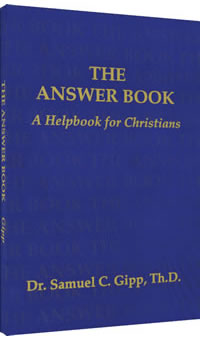
Excerpted from "The Answer Book" ©1989 Samuel C. Gipp. Reproduced by permission
QUESTION: I've heard that the italicized words in the King James Bible should be removed because they were added by the translators. Should they be removed?
ANSWER: If we remove any of the italicized words we must either remove them ALL or accept them ALL as Scripture.
EXPLANATION: Following are the problems with removing the italicized words from the Bible:
1. Anyone who has ever translated from one language to another knows that words MUST be added to the finished work to complete the sentence structure of the new language.
All translators do this when translating the Bible. The King James translators were men of integrity so they put the added words in italics.
Example #1
Psalm 23:1 reads "The LORD is my shepherd" in the King James Bible. The word "is" was added by the translators to complete the sense of the sentence.
Psalm 23:1 in the New International Version reads, "The LORD is my Shepherd."
So it is plain to see that both sets of translators added the same word to complete the sentence. Yet the King James translators put the word in italics to inform the reader that they had added it.
Example #2:
John 1:8 reads, "He was not that Light, but was sent to bear witness of that Light" in the King James Bible.
John 1:8 reads, "He was not that light, but was sent to bear witness of that Light" in the New King James Version.
Again both sets of translators have added words to their translation so that it would make sense. In this case it is the phrase "was sent." Yet again, it is the King James translators who put their addition in italics for clarity.
Thus we see that the translators of our Bible should be commended on their integrity and ethics for their addition of the italicized words instead of castigated for a practice which all of our modern "would be" scholars follow routinely.
2. Critics of the Bible, fundamental or otherwise, claim that the italics can be removed, but NEVER remove them all. Usually they are stumped by a passage such as the word "unknown" in I Corinthians 14. Since they cannot explain the passage with the italicized word in the passage they make the thoughtless statement reproduced above and remove the problem word.
But this opens a tremendously large "can of worms"! For if we say that italicized words do not belong in the text, we cannot say that one italicized word should be removed from the Bible, but we must say that ALL italicized words must be removed from the Bible. Even the casual student of Scripture knows that the Bible will make no sense at all if ALL italicized words are removed.
To remove one italicized word and leave another in is to claim Divine Inspiration in knowing which words should go and which words should stay.
Regardless of how great a preacher, soul-winner, or scholar might be none of us are going to bow our knees to them with the claim that they are Divinely inspired to reject or accept words in the Bible. If we are so foolish as to exalt a man's opinion in such a way, who should we exalt? There are hundreds of Bible critics who would vie for the office of "Official Divinely Inspired Bible Corrector". Who would be the lucky person? How would we choose him? And WHO would be so naive as to think that all Christians would follow his decrees? Yet without his decrees we have NO WAY OF KNOWING which italicized words belong in the Bible and which ones do not.
So we see that overcoming problem passages will require prayer and Bible reading instead of carelessly removing a troublesome word.
3. One of the classic defenses for leaving the italicized words alone is found in II Samuel 21:19.
"And there was again a battle in Gob with the Philistines, where Elhanan the son of Jaaroregim, a Bethlehemite, slew the brother of Goliath the Gittite, the staff of whose spear was like a weaver's beam."
By omitting the italicized words we have the Bible saying that Elhanan killed Goliath. Of course everyone knows that I Samuel 17 says that David killed Goliath. So we finally have the Bible that all lost men love to refer to when they say, "The Bible has contradictions in it".
Of course, our "Divinely Inspired Bible Corrector" would probably say the italics in II Samuel 21:19 do not need to be removed. But then who's to know which words to remove or which ones to keep in unless God "appeared" to them and told them.
4. Our fourth and best reason for not meddling with God's choice of words for His Bible comes from none other than the Apostles Peter and Paul and the Lord Jesus Christ Himself.
First, take a Bible (King James, of course) and read Psalm 16:8. I have set the LORD always before me: because he is at my right hand, I shall not be moved.
You will notice that the two words "he is" are in italics. Yet when we find the Apostle Peter quoting this verse in the New Testament in Acts 2:25 we find it says:
"For David speaketh concerning him, I foresaw the Lord always before my face, for he is on my right hand, that I should not be moved:"
So here we find the Apostle Peter quoting Psalm 16:8 italicized words and all! You would almost believe that God wanted them in there wouldn't you?
Now it might be pointed out that Peter was an unlearned and ignorant man (Acts 4:13) and so, lacking the "benefits" of a Bible college education, he blindly accepted the Bible (King James?) as every word of God. But let us look at the same phenomena concerning the Apostle Paul and the Lord Jesus Christ.
Paul, as did other New Testament writers, often quoted from the Old Testament in his writings. In doing so, he quoted as did the others directly from the Hebrew Text. We have several of Paul's quotes which contain words not found in the Hebrew original.
In Romans 10:20 Paul quotes Isaiah 65:1.
Romans 10:20: "But Esaias is very bold, and saith, I was found of them that sought me not; I was made manifest unto them that asked not after me."
Isaiah 65:1 "I am sought of them that asked not for me; I am found of them that sought me not: I said, Behold me, behold me, unto a nation that was not called by my name."
Yet we see that the words "them that" which Paul quoted as though they were in Isaiah 65:1 exist only in the italics of the King James Bible.
The same is true of I Corinthians 3:20, "And again, The Lord knoweth the thoughts of the wise, that they are vain." which is a quote of Psalm 94:11, "The LORD knoweth the thoughts of man, that they are vanity." where we find the word "are" supplied by the translators.
But the most unexplainable is Paul's quote of Deuteronomy 25:4 in I Corinthians 9:9. For it is written in the law of Moses, Thou shalt not muzzle the mouth of the ox that treadeth out the corn. Doth God take care for oxen?
Deut 25:4: "Thou shalt not muzzle the ox when he treadeth out the corn."
Here we find Paul quoting the words "the corn" just as if they had been in the Hebrew original even though they are only found in the italics of our Authorized Version!
If one were to argue that Paul was quoting a supposed Greek Septuagint translation of the original Hebrew, our dilemma only worsens. For now, two perplexing questions present themselves to us. First, if such a Greek translation ever existed, (which is not documented in history) by what authority did the translators insert these words? Secondly, if they were added by the translators, does Paul's quoting of them confirm them as inspired?
While you ponder these important questions, we will note that Jesus also quoted from what appears to have been a King James Bible.
We find Him quoting a word that wasn't in the "originals". In fact, a word that only exists in the italics found in the pages of the King James Bible.
Read below, please, Deuteronomy 8:3.
"And he humbled thee, and suffered thee to hunger, and fed thee with manna, which thou knewest not, neither did thy fathers know; that he might make thee know that man doth not live by bread only, but by every word that proceedeth out of the mouth of the LORD doth man live."
You will note that the word "word" is in italics, meaning of course, that it was not in the Hebrew text. Upon examination of Deuteronomy 8:3 in Hebrew one will find that the word "dabar" which is Hebrew for "word" is not found anywhere in the verse.
Yet in His contest with Satan we find Jesus quoting Deuteronomy 9:3 as follows in Matthew 4:4.
"But he answered and said, It is written, Man shall not live by bread alone, but by every word that proceedeth out of the mouth of God."
While quoting Deuteronomy 8:3 Jesus quotes the entire verse including the King James italicized word! Even an amateur "scholar" can locate "ramati", a form of "rama", which is Greek for "word", in any Greek New Testament.
So, just as critics of the Bible like to joke and say, "Well, the King James was good enough for the Apostle Paul so it's good enough for me." A true Bible-believer can truly say, "Well, the King James was good enough for the Apostles Peter and Paul and for the Lord Jesus Christ, so it's good enough for me".
So we see we have three options on what to do with the italicized words in the Bible.
(1) Remove All of them.
(2) Exalt one of our fundamental Bible critics to the office of "Official Divinely Inspired Bible Corrector" and then give his decrees all the weight and allegiance that we would give to Jesus Christ.
(3) Leave all the words in our divinely inspired Bible alone, and trust that just maybe Jesus Christ is correct.
It's as though we had a choice.
- See more articles on related topics:
- Bible Versions
- New International Version (NIV)
- Bible Translation
- Changes in Bible Versions
Products of interest:
-
Answer Book, The
165 pages
Over 60 of the most commonly asked questions about Bible versions are answered in an easily understood style. -
Understandable History of the Bible
557 pages
You'll learn the history of the Bible in this well-documented but easy-to-understand book. -
Look What's Missing!
256 pages
For years, publishers have been removing words, and even whole verses, from modern Bibles. What's missing from your Bible? Take a look! -
Did Jesus Use the Septuagint?
112 pages
They're saying Jesus used the Septuagint. But what they really want is to add something to your Bible. -
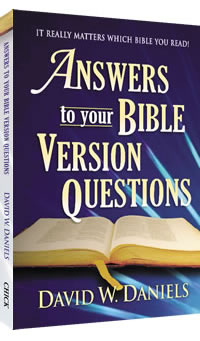
Answers to Your Bible Version Questions
224 pages
David W. Daniels answers difficult questions about the KJV. Learn how to defend the KJV and why you can trust it.