Customer Service


Issue Date: 11/18/2025

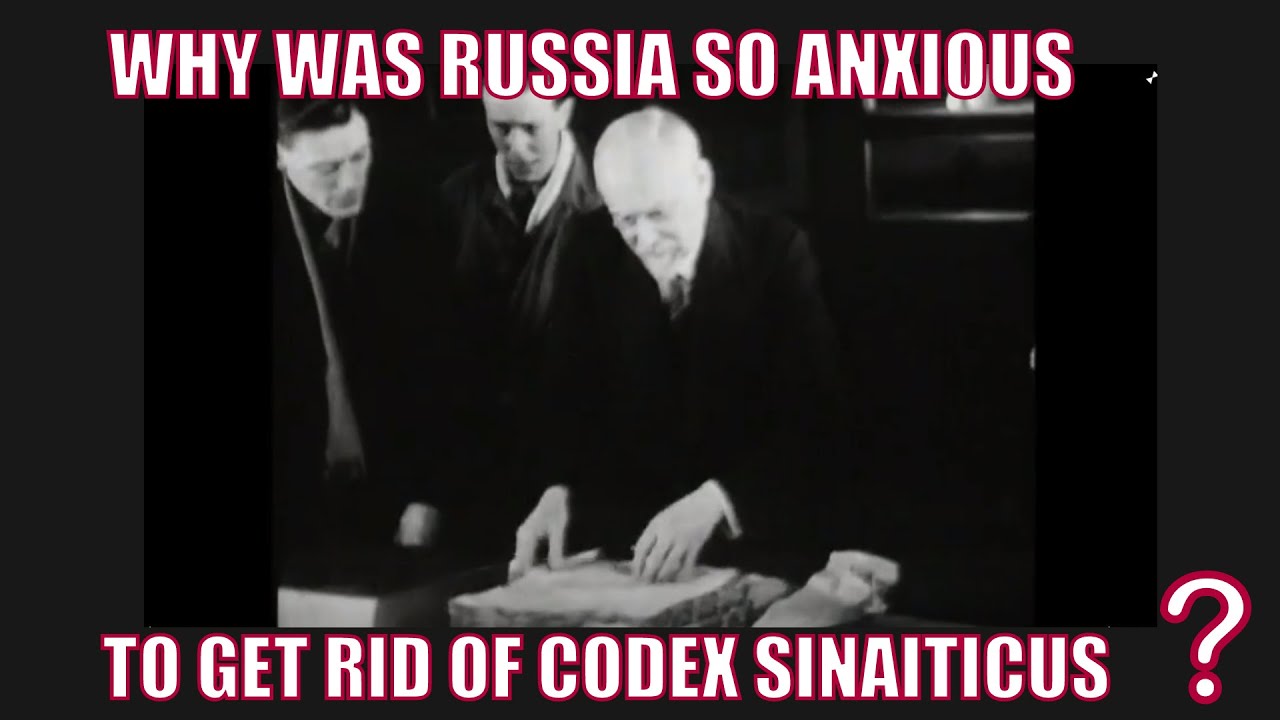
Russia Did WHAT with the Sinaiticus?
Hi Friend, 👋
We're nearing the end of our King James Defenders series, and that's why we'll be zeroing in on some very important remaining issues. First up, Russia's sketchy treatment of the supposed "world's oldest Bible."
For over 70 years, Russia held onto a manuscript scholars loudly called “the world’s oldest Bible.”
So why did they suddenly sell it off in 1933?
What did they know?
Meet N.A. Morozov 🧠📚
Nikolai Alexandrovich Morozov (1854–1946):
👉 Most importantly: he personally examined Codex Sinaiticus.
“This Doesn’t Look Ancient…” 👀
Morozov’s observations were startling:
Morozov expected fragile, brittle parchment. Instead:
⚠️ He had handled truly ancient manuscripts — and they fall apart easily
Sinaiticus didn’t act ancient at all.
Vaticanus Looked the Same 🏛️📜
Morozov also questioned Codex Vaticanus:
Scholars claimed it was ancient because Tischendorf popularized the idea.
Johann Leonhard Hug first suggested it in 1810 — and I translated Hug’s book for my next Westcott & Hort volume.
Other researchers dated it anywhere from the 400s to 1100s.
Then Morozov dropped the bomb:
“…nothing could prevent a lover of beautiful books… from having a scribe make such a copy in the 16th century.”
📌 In other words: It could easily be a medieval copy.
Erasmus Already Suspected This 🔍
Erasmus — whose Greek text sparked the Reformation — believed Vaticanus was written for the Council of Florence (1435–1445).
That’s 1,000 years later than modern scholars claim.
And the evidence matches him.
Even the British Library’s own publication admits:
“We cannot be certain of the exact date… nor trace its history before the fifteenth century.”
So even top scholars quietly admit:
👉 there’s no proof Vaticanus existed before the 1400s.
Did Morozov Influence Russia?
Timeline:
Coincidence?
Maybe.
But it sure looks like Russia realized the manuscript wasn’t nearly as old as claimed.
England paid £100,000 — a fortune.
🎯 My conclusion: England got conned.
Russia got money for its war effort.
England got a manuscript that wasn’t what they thought.
The Real Lesson 📖🔥
When people abandon the:
words of God in English — the King James Bible —
…they fall for anything.
I’ve chosen my Bible.
What about you?
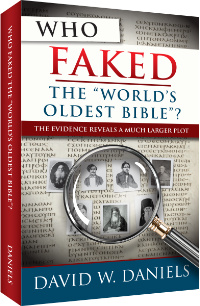
The crime is fraud, and you’re the detective!
If the devil has cooked up a plot against your Bible, would you want to know it? In this book, you'll discover the evidence that reveals a much larger plot.
"Wonderful book detailing the history of the Sinaiticus!"
"I continue to read this book and I recommend it to others. It gives a very detailed history of how this Sinaiticus text was brought to the public and that the Sinaiticus is a book of doubt, whereas the Received Text is a book of faith in the Lord Jesus Christ."
— Erin (Verified Buyer)
Did you complete last week's quiz?
Here are the answers!
Missed the previous emails? Click below to browse them all.
Customer Service
Have a question? Please contact us.
By Phone: 1-909-987-0771
Email: postmaster@chick.com
Fax: 1-909-941-8128
Do you have testimony
you would like to share?
Just email it to testimonies@chick.com
Or share it on our social media pages below.
We would love to hear from you!
Do you live outside the USA? Find a distributor of Chick tracts in your country.
If you no longer want to receive these emails from us, please unsubscribe.