


The Collapse of Excellence
You’re not imagining it. Housing, consumer goods, air travel, and even scientific research show clear, measurable declines in reliability and integrity.
From 2020 to 2024, building material costs rose 38%, yet new homes are smaller and constructed with cheaper materials. Repetition, mass-production, and cost-cutting have completely replaced craftsmanship and aesthetic design. The result is rows upon rows of identical houses that look the same, age the same, and suffer from the same lack of quality.
The textile and apparel industry shows similar trends. In the race to cut costs, manufacturers increasingly outsource production to countries that produce cheap garments with low quality resulting in clothing that wears out faster. Denim, once a symbol of durability, is now often thin, flimsy, and short-lived.
Air travel has deteriorated as well—and not by accident. Leg room in economy class has shrunk by up to five inches since the 1980s, while seat widths continue to narrow. Fees for basic services—baggage, boarding, seat selection—have hit record highs. Analysts describe the trend as a deliberate trade-off: profit and efficiency are prioritized at the expense of passenger comfort, safety, and dignity.
Scientific Integrity Under Threat
The decline even extends to scientific research. A recent Science and Culture Today investigation details widespread fraud in academia. Retractions of research papers have increased fivefold in the past decade. Shockingly, even Harvard and Johns Hopkins are part of the issue.
“Fraud in science has become surprisingly common,” the report states. Intense pressure to publish and minimal oversight among other factors have created an environment of falsification, fabrication, and plagiarism. Sophisticated “paper mills” churn out ready-made studies with charts, data, and even fake peer reviews.
The problem lies in incentives. Major academic publishers profit heavily from higher publication volumes. Quality control becomes secondary to revenue, fostering a culture of expedience and deception.
At UC Berkeley, the prestigious journal Philosophy & Public Affairs dealt with this issue firsthand when faced with increasing pressure from its publisher to dramatically increase output. Rather than compromise on quality and standards, the journal’s entire editorial board resigned. In defense of their decision, Editor-in-Chief Anna Stilz said, “I wanted to give our readers high-quality pieces. We were selective.”
Consequences of a Moral Vacuum
Righteousness and integrity are cultural stabilizers. Scripture states the principle plainly: “Righteousness exalteth a nation, but sin is a reproach to any people” (Proverbs 14:34). When individuals embrace righteousness, integrity rises. When integrity rises, entire societies function with greater honesty, trust, and excellence.
Every life transformed by the gospel strengthens the moral fabric of the community, raises standards of conduct, and reinforces a culture where quality, reliability, and accountability matter. Biblical moral and ethical standards alone serve as the anchor of excellence.
When objective standards grounded in biblical truth are removed, human effort becomes inconsistent and unreliable. The decline in quality affects safety, reliability, and trust. Homes crumble faster. Clothing wears out sooner. Airline passengers face increasing discomfort. Scientific conclusions become suspect. These are tangible costs of abandoning a moral foundation.
Analysts warn that the pattern is accelerating. Without moral and ethical anchors, expedience, profit, and volume will continue to take priority over truth, craftsmanship, and human dignity. Restoring reliability and excellence requires a moral foundation strong enough to keep people honest and doing the right thing in every part of society.
- See more articles on related topics:
- Other Subjects
Donations to the mission fund are processed for us by PayPal. You can use a credit card or PayPal account.
Please use the "Donate now" button below to be redirected to PayPal to make your donation by credit card or your PayPal account. Thank you!
Other Articles from March/April 2026:
More on Other Subjects:
Products of Interest:
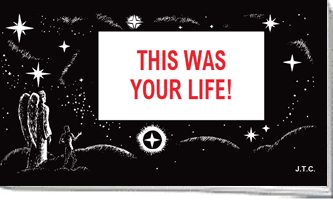
This Was Your Life
Most Popular Chick Tract! Everything you've said or done will be played back at judgment. Are you in the Book of Life?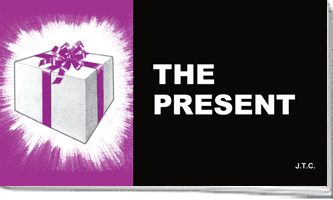
Present, The
The king had a present that he wanted to freely give to those in his kingdom who would receive it. God wants to give you a free gift...eternal life through His Son, Jesus.
Greatest Story Ever Told
Here's why Jesus really came to earth...from His birth to His resurrection.-
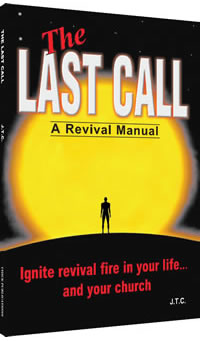
Last Call, The
64 pages
If you are serious about revival in your life, home, or church, this book is for you. -
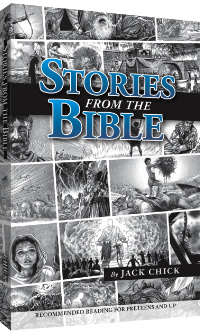
Stories from the Bible
176 pages
These beautiful illustrations help tell the true stories of some of the biggest Bible figures. You'll get a fresh mental picture of what it was like for these heroes of the Bible. -
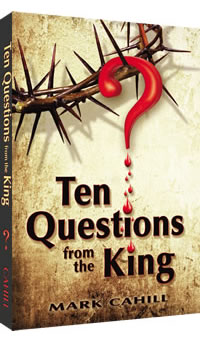
Ten Questions From The King
208 pages
Ten questions that will challenge you in your walk and witness for Christ. -
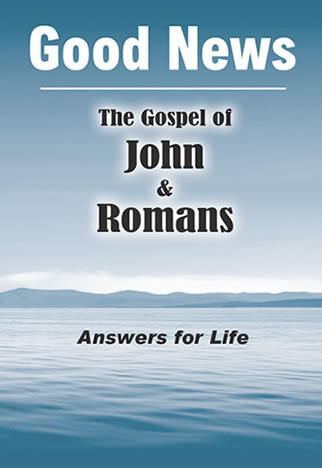
These John & Romans scripture portions, available in English (KJV) or Spanish (RVG), fit perfectly in a shirt pocket or purse, making them easily available for a witnessing opportunity. Use them to saturate your community with the Word of God.