
Assisted Suicide Bill Killed in UK

An attempt to legalize assisted suicide in England and Wales has been defeated after British lawmakers reversed course on legislation they supported just over a year ago.
On September 11, the House of Commons voted 286-270 against the Terminally Ill Adults (End of Life) Bill. The 16-vote defeat stopped the legislation from advancing and means assisting another person to commit suicide remains illegal in England and Wales.
The result was a dramatic turnaround.
The original bill would have allowed certain terminally ill adults expected to have six months or less to live to seek medical assistance to end their lives.
Supporters argued that terminally ill adults should be permitted to choose the circumstances of their deaths. Opponents questioned whether any system could adequately protect patients who might feel pressured to die because of their health, finances, family circumstances or dependence on others.
The state of Britain's palliative care system also became a major issue.
Former health minister Dr. Zubir Ahmed argued that a patient cannot be offered a meaningful choice between assisted suicide and continued life if adequate end-of-life care is unavailable.
"A choice between death without adequate care and a death prematurely self-induced is not a real choice," he wrote. "The same concern came up again and again: is it really a 'free choice' when palliative care and social support fall short?"
Another concern involved the bill's six-month requirement.
Predicting exactly how long a terminally ill patient will live can be difficult, opponents argued, particularly as treatments continue to improve. A person judged to have only months to live may survive much longer than expected.
Amazingly, some lawmakers who had previously supported assisted suicide reconsidered their positions. Labor MP Janet Daby was one of them. In an about-face, she told the House of Commons, “I cannot again, in good conscience, vote for the bill."
That change was reflected in the final numbers: 39 members of parliament switched from a ‘yes’ to a ‘no’ vote.
Christian and pro-life organizations had campaigned against the legislation, arguing that the answer to suffering at the end of life should be better care rather than assistance in causing death.
Following the vote, Ross Hendry, CEO of the Christian organization CARE, credited Christians who had prayed and worked against the proposal. "God heard people's prayers," he said.
Right to Life UK described the result as a "victory for hope, compassion and life." Care Not Killing called for greater attention to Britain's palliative care system so that terminally ill patients have access to proper treatment and support.
The result leaves the existing law unchanged: encouraging or assisting another person's suicide remains an offense carrying a potential prison sentence of up to 14 years.
The reversal is a reminder that Christians should never assume the battle is already lost. When something is wrong, we should pray, speak out, and speak up for those who cannot speak for themselves.
Most importantly, we need to share the hope we have beyond the grave. We may not be able to change a bill or a law, but we can give out the Biblical answer to all of life’s questions. Chick tracts are a wonderfully simple way to put the truth into someone's hands and point them to the One who gives eternal life.
Keep praying. Keep speaking. And keep planting the seed of the Gospel. You never know what God may do with it.
- See more articles on related topics:
- Other Subjects
Products of interest:
-
Unloved
Rejected by his family, unemployed and with no one to turn to, Jimmy was ready for suicide. But then he met the One who truly loves him. -
Love Story, A
Who loves you so much He gave you life and left heaven to die for you? It was Jesus! -
Cathy
Cathy knows she will soon go to be with her Best Friend, but she is not afraid. First, she wants to make sure Joey does not miss out! -

Room 310
Danny is dying of cancer. The man in the bed next to him tries to win him to Jesus. A compelling story with a happy ending. -
Then What?
After Jesus comes to get His people (rapture)... Then what? -
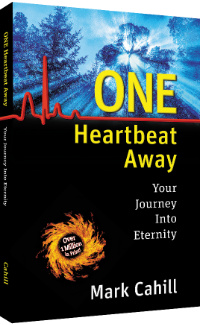
One Heartbeat Away
254 pages
You died. Now what? Is there anything out there after we take that last breath? -
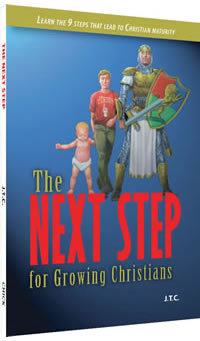
Next Step, The
64 pages
In this fully illustrated, easy reading book, Jack Chick uses cartoons to teach basic Bible concepts for Christians. A great gift for anyone who wants to grow spiritually.