
Vatican Bids for Global Authority
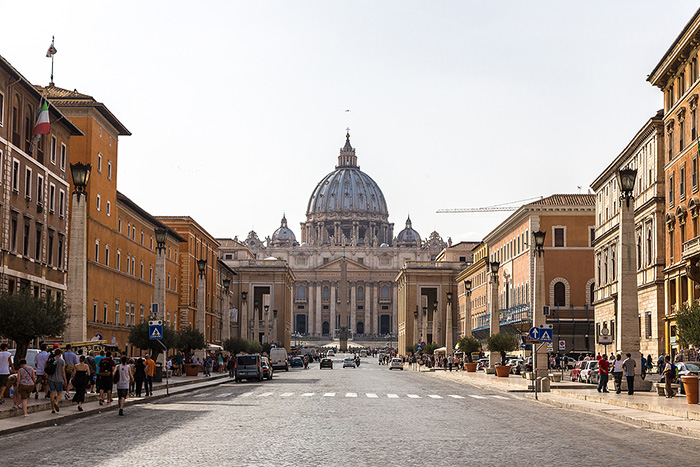
For centuries, the papacy has claimed authority over rulers, nations, and consciences. The Vatican has claimed a position as a global authority, mediating conflict and defining peace for the world.
Now in recent years, they’ve been ramping up their campaign through diplomatic engagement, interfaith initiatives, and moral appeals in the guise of unity and peace.
During the Week of Prayer for Christian Unity, Cardinal Kurt Koch, Prefect of the Dicastery for Promoting Christian Unity, stated that ecumenism serves society by presenting unity in a divided world. A fragmented Christianity, he argued, lacks the capacity to contribute meaningfully to global stability. In other words? Everyone should follow the Catholic organization and toss little things like doctrinal truths aside.
At the institutional level, the Holy See continues to deepen its diplomatic reach. It maintains formal relations with nearly every nation, participates in international forums, and convenes political and religious leaders who otherwise do not cooperate. This presence has cultivated the Vatican’s image as the world’s moral conscience.
The Vatican’s peace agenda completely sets aside doctrinal truth in favor of consensus. This approach is most visible in its interfaith initiatives, which treat religious differences as parallel moral paths rather than competing truth claims.
The 2019 Document on Human Fraternity, signed by Pope Francis and a leading Islamic cleric, states that religious diversity is “willed by God.” This reduces faith to a shared concept rather than a call to repentance and faith in Christ alone. It allows global religious cooperation while removing the gospel entirely.
Speaking at the United Nations, Archbishop Gabriele Caccia, the Holy See’s Permanent Observer, described rising violations of human dignity and emphasized the failure of existing collective responses.
He then emphasized the need for shared language, agreed definitions, and constructive dialogue as foundations for global cooperation. Naturally, he presented the Vatican as an ethical steward that can operate within institutions such as the United Nations. The Vatican, he encouraged, should bear responsibility for shaping outcomes by uniting nations, uniting religions, and crafting policy at the global level.
Scripture warns that a final world system will unite political, economic, and spiritual authority. Religion will serve as the unifying framework before becoming a tool of control. The Antichrist is described as a peacemaker who consolidates authority through unity and resolves global instability before demanding allegiance.
The Vatican’s insistence that unity is necessary for world peace, combined with its ever-expanding role in international diplomacy, fits this pattern. Ecumenism provides the spiritual foundation. Global institutions provide the platform. Peace provides justification.
These developments reveal a deliberate trajectory. The Vatican is laying the theological, institutional, and moral groundwork to function as the world’s peacemaker—the exact role Scripture assigns to the Antichrist.
The Vatican is already embedded within international institutions. It shapes global responses to war, crime, and human suffering. It calls unity a requirement for global stability, regardless of doctrinal differences. In other words, “unity” is needed for “peace” and truth is negotiable.
Scripture warns that the final world leader will not rise through open hostility to religion, but through its harmonization. He will be trusted because he resolves conflict. He will be welcomed because he promises peace. He will gain allegiance because the world is desperate for order.
The Vatican’s current trajectory mirrors this pattern. It presents itself as the one institution capable of uniting faith, morality, and global governance under a single leader. The Catholic institution counts on Christians not really understanding Catholic doctrine to make gains around the world. However, the minute Christians open their eyes to the truth of Catholic theology and beliefs, they often recognize right away that it is impossible to be in unity with them.
This is why it’s so important for us to share the truth about the Catholic church with friends, loved ones, and even strangers. A simple way to do so is by passing out popular Chick tracts that tackle this topic like Why is Mary Crying and Is There Another Christ?
- See more articles on related topics:
- Catholicism
- False Religions
- Globalism
- Papacy
Products of interest:
-
Are Roman Catholics Christians?
Show Catholics that neither their good works nor their religion can save them. -
Last Rites
When this Catholic dies, he learns that his church couldn't save him. -
Why Is Mary Crying?
Devotion to Mary doesn't please her. It breaks her heart. -
Understanding Roman Catholicism
224 pages
37 Catholic doctrines from the current Catechism are compared with the Scriptures. They're not Christian! -
Answers To My Catholic Friends
64 pages
A gentle witness you can give Catholics that deals with venerating images, purgatory, where popes go when they die, and more. -
50 Years in the Church of Rome
368 pages
This classic work shows how this priest began to question Catholic teachings until he became saved, and led his entire parish to salvation. -

Alberto
32-PAGE, FULL COLOR COMIC BOOK - Alberto Series Part 1 - Here is how Alberto, as a Jesuit, helped destroy churches and ministries. But as he read the Scriptures, he saw that Catholicism couldn’t save.