
The Nation is Searching

In February 2026, Barna Group found that nearly one in three U.S. adults believe a spiritual revival could be coming within the next 12 months. Respondents cited prayer (46%), young people turning toward God (44%), and a search for meaning and purpose (41%) as key reasons for their thinking.
Young adults pointed to isolation, mental health challenges, and anxiety as reasons for revival.
For the youngest generation, spiritual curiosity is being forged in the midst of anxiety, isolation, and instability. Mental health struggles, social fragmentation, and a lingering sense of uncertainty have left many searching for something deeper and more durable than what the culture has offered.
Troy Miller, president and CEO of the National Religious Broadcasters, recently argued that the weakening of the American family has played a significant role in cultural instability. Decades of shifting norms around marriage, the erosion of long-term commitment, and the rise of digital substitutes for real human connection have reshaped the environment in which younger generations are coming of age. What used to be a core stabilizing structure of our society has, in many cases, been completely fragmented.
It is easy to see how this kind of environment could lead to disorientation, discouragement, frustration, and longing. When foundational relationships feel uncertain, the search for meaning often intensifies. And increasingly, that search appears to be turning in a spiritual direction.
A recent study from Lifeway Research highlights an important reality in the midst of this growing interest: openness to faith does not necessarily translate into depth of belief.
Those who demonstrate interest in faith and attend church weekly are significantly more likely to affirm core Christian doctrines—such as the resurrection of Jesus, the authority of Scripture, and biblical teachings on moral issues. However, the opposite is true for those who show interest but do not seek answers from a Bible-believing church.
Infrequent churchgoers—while still identifying with Christianity to some degree—hold views that diverge sharply from biblical teaching. This group believes that Christianity may be beneficial, but they reject the bodily resurrection of Jesus, the Biblical definition of marriage, and the authority of Scripture. For this group, their desire for stability and faith is overridden by the influence of modern culture.
The current trend seems to be a growing openness to God. This also presents a challenge for the Church. Without clear gospel teaching, intentional discipleship, and meaningful community, the trend can turn into a fad that fades away into nothingness.
Cultural openness has often preceded moments of spiritual renewal in the past. But openness alone does not produce revival. It creates the conditions in which revival might occur. What happens next depends largely on whether the Church is prepared to meet the moment.
We are in the midst of cultural instability. The youngest generation is searching for meaning, and there is a growing belief that spiritual change is possible. One of the most immediate ways we can respond to this is by sharing the gospel by giving out Chick tracts.
A Chick customer recently told us one lady’s reaction when given a Chick tract. The lady said, “I haven't seen one of these since I was a little girl." Then she said, "Thank you. It says something about a church that passes out tracts." You know, she is so right! It says something about people and churches that pass out tracts. It says that they really believe the Bible and that they love Jesus enough to obey Him (Luke 11:23).
Every tract handed out plants the gospel seed, sparks conversations, and offers real hope to a nation in desperate need for it. Even the smallest act of faithfulness has the potential to shape someone’s entire life —and help lay the groundwork for revival itself.
This is the opportunity of a lifetime. Let’s make the most of it.
- See more articles on related topics:
- Evangelism
Products of interest:
-

This Was Your Life
Most Popular Chick Tract! Everything you've said or done will be played back at judgment. Are you in the Book of Life? -

Love Story, A
Who loves you so much He gave you life and left heaven to die for you? It was Jesus! -
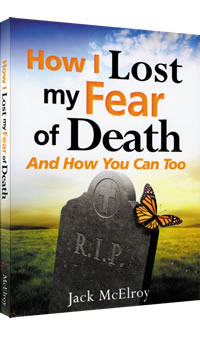
How I Lost My Fear of Death
165 pages
People live their whole lives with a nagging fear that they're going to die. Here's an easy way to help them fix it! -
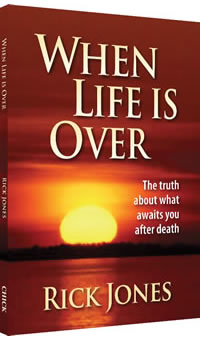
When Life Is Over
64 pages
This short, easy read has everything you want to tell lost friends and family about salvation. Gentle and easy to give to anyone. -

Choice, The
All through life we make choices. But there is one choice that is more important than all the rest. -

It's All About You!
Two "someones" are watching you. And one has it in for you. Now, you have a decision to make.