
“Hell” Outlawed in the UK
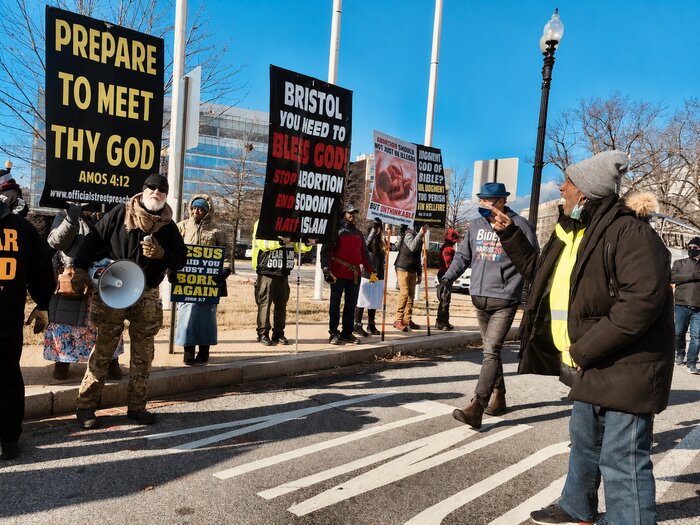
In Colchester, England, a church’s street outreach has become the subject of formal enforcement action under a Community Protection Notice. The Bread of Life Community Church in Essex, which has conducted public preaching and charitable outreach for years, has been warned that its messaging is liable to cause “harassment, alarm and distress.”
The group first came under fire for using speakers in public spaces (something done by many outdoor speakers/preachers). But now authorities are questioning the content of the preaching itself, including references to biblical judgment and hell. Locals raised concerns and complained after a message was preached that contained the topic. The local council has now suggested that such messaging could have a “detrimental effect on the community.”
Supporters of the church rightly raise their own concerns and argue that the move marks a shift into regulating speech and doctrine. The church has appealed the notice, arguing it unlawfully targets protected religious expression and exceeds the scope of public order powers.
Pastor Stephen Clayden, responding to the action, said the church has preached peacefully for years without harm and would not be deterred from its message.
A separate case in Bristol involves Pastor Dia Moodley. The pastor has been navigating a months-long criminal investigation following his arrest while street preaching in late 2025.
He was initially arrested on suspicion of religiously aggravated public order offences and inciting religious hatred. What did he do to deserve this? He touched on the dangers of Islam and transgender ideology while preaching in a public square.
Part of the investigation included a voluntary police interview. According to Pastor Moodley and his legal supporters, police questioning focused heavily on why he preached in areas where Muslims were present and whether he should criticize certain ideologies as a Christian.
Moodley shares that the process itself has become punitive. While he is allowed to live a regular life during the investigation, he is effectively restricted from preaching due to fear of further arrest.
Legal representatives supporting him argue the case raises concerns about unequal treatment in public discourse. In other words, authorities wouldn’t arrest a Muslim speaker or a trans speaker if their words offended a Christian. However, if offense is taken by listeners because of a pastor’s message, that message is being treated as criminal.
In Hamburg, Germany, two Christian YouTubers are under investigation under Article 166 of the German Criminal Code for allegedly “denigrating a religious community.”
The men, known as Niko and Tino, run a Christian YouTube channel called Eternal Life. Their videos often involve conversations about the Bible, the gospel, and public issues.
The investigation reportedly centers on a video in which they criticized Islamic antisemitism after the October 7 attacks on Israel and pro-Hamas demonstrations in Germany. The video was later removed after YouTube flagged it.
German prosecutors are examining whether the statements insulted a religious community in a way that could disturb public peace. The law can carry a fine or imprisonment if authorities decide the threshold has been met.
Supporters of the YouTubers argue that their comments were religious and political speech, not criminal conduct. Their legal team has called for the investigation to be dropped.
The case has become another example of how criticism of religion, especially criticism of Islam, can quickly be framed as a public-order issue in parts of Europe.
Taken together, these cases show a troubling trend. In England, street preaching is being challenged through public-order notices and criminal investigations. In Germany, online Christian commentary is being examined under speech laws.
Christians should be able to preach, warn, persuade, and speak publicly without fear that biblical doctrine will be treated as harassment or hate. The gospel has always offended some hearers, but offense is not the same as harm.
As governments increasingly claim the power to regulate religious speech in the name of public order, believers must pay attention. Today the issue may be street preaching. Tomorrow it may be church teaching, online videos, or private conversations.
- See more articles on related topics:
- Evangelism
- Religious Freedom
- Street Preaching
- Hate Speech
Products of interest:
-
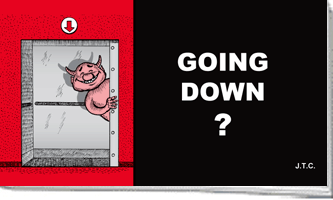
Going Down?
He was sure there was no real hell... or was there? When he saw how Evans died, Bob’s nightmares began. -
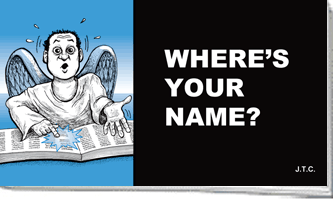
Where's Your Name?
Hell... what it is, where it came from, and how YOU can stay away from it. -
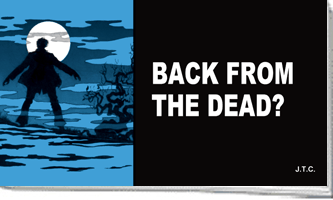
Back From The Dead?
They thought he was dead, but he woke up screaming, "I've got to get saved! I saw hell! I never want to see it again!" -
Soul-Winner's Handy Guide, The
176 pages - Over 14,000 Sold!
A guide book with answers to common doctrinal questions. -
How I Lost My Fear of Death
165 pages
People live their whole lives with a nagging fear that they're going to die. Here's an easy way to help them fix it! -
When Life Is Over
64 pages
This short, easy read has everything you want to tell lost friends and family about salvation. Gentle and easy to give to anyone.