


Vatican Pushes Unity, Ignores Truth
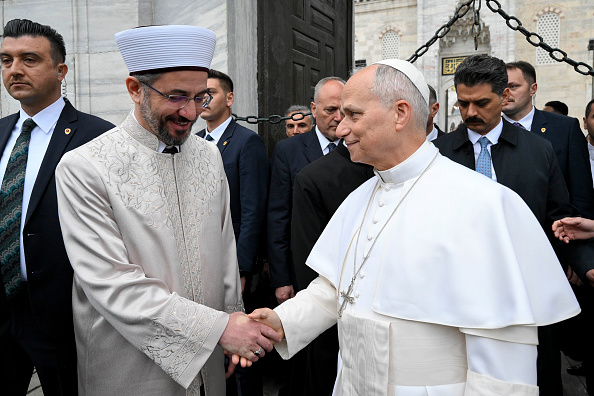
During a recent visit to Türkiye (formerly Turkey), Pope Leo XIV became the third pope to enter Istanbul’s Blue Mosque. However, unlike his predecessors, he not only visited the significant Islamic site but took it a step further —he approved of it.
During his tour, he was accompanied by local Muslim leaders and officials and spent time inside the mosque in quiet reflection. The Vatican later described the moment this way: “[The Pope entered] in silence, in a spirit of recollection and attentive listening, with deep respect for the place and for the faith of those who gather there in prayer.”
Afterward, Pope Leo went further, referring to the mosque as a “space proper to God,” describing it as a place for people to seek “the presence of the Most High.”
However, even many Catholics rejected this statement. Biblical Christianity and Islam disagree on nearly every major tenet. Islam rejects Christ as the Son of God and rejects His deity altogether. These are two of the biggest foundational differences. Yet Pope Leo chose to focus on the nonexistent “shared values” of reverence, prayer, and seeking God.
Later during the same trip, Pope Leo traveled to the Patriarchal Church of Saint George where he joined Ecumenical Patriarch Bartholomew I in a prayer service. The meeting focused heavily on “Christian unity” and the relationship between Rome and Eastern Orthodoxy.
Referring to Christ’s prayer “that all His disciples may be one” he pushed for visible unity and encouraged renewed efforts toward “full communion among all Christians.” He did not, however, discuss what it truly means to be a disciple of Christ.
The meeting concluded with Pope Leo and Patriarch Bartholomew signing a joint declaration reaffirming shared commitment to “Christian unity” and peace —but not to biblical doctrine or truth.
The emphasis on interfaith “unity” did not stop in Türkiye. Shortly afterward, Pope Leo met with participants attending an interfaith conference and again called for greater cooperation between religions.
During the gathering, he urged Christians and Muslims to “revive humanity where it has grown cold” and “transform indifference into solidarity.” He also described compassion and empathy as “essential attitudes” shared by both Christianity and Islam.
His message centered heavily on joining together for a shared social mission and common purpose — but what common purpose could Catholics have with Muslims?
Then, ahead of Vesak—the major Buddhist holiday commemorating the birth, enlightenment, and death of Buddha—the Vatican released a message encouraging Christians and Buddhists to become “artisans of peace.” But the statement went further than extending holiday greetings.
The message equated Buddhist teachings with Jesus’ words in Matthew 5:9 and 5:44, claiming that there was a “deep spiritual convergence” between Buddhism and Christianity. It stated that “both traditions converge” toward a shared vision of peace and encouraged religious leaders to become “authentic partners in dialogue and true agents of reconciliation.”
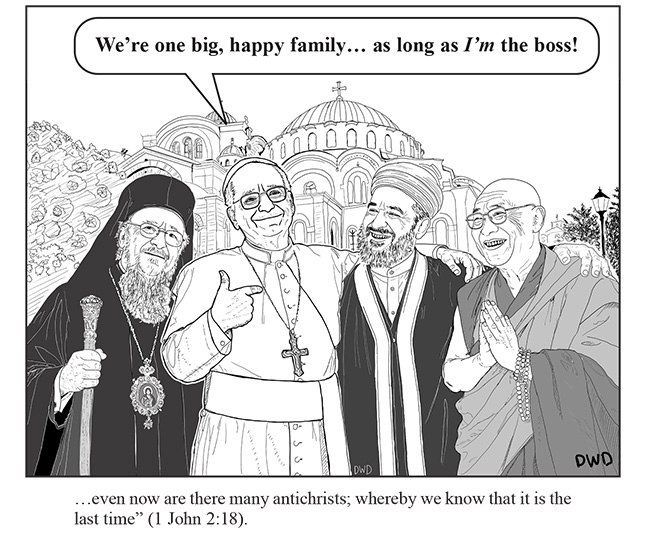
Pope Leo is willingly taking religions that present fundamentally different understandings of God, truth, salvation, and Christ Himself, and putting them on the same level as one another. He is equating Christ and Muhammad. He is effectively stating that Buddhism and Bible-based salvation share a common thread.
However, scripture is clear. There is one way to salvation and that is Christ alone. There is no room for this false message that the world’s religions are simply different roads leading to the same destination.
- See more articles on related topics:
- Catholicism
- Ecumenism
- Papacy
Donations to the mission fund are processed for us by PayPal. You can use a credit card or PayPal account.
Please use the "Donate now" button below to be redirected to PayPal to make your donation by credit card or your PayPal account. Thank you!
Other Articles from July/August 2026:
More on Catholicism:
Products of Interest:
-

Smokescreens
96 pages
Jack Chick shows that the ecumenical movement isn’t designed to bring all Christians into unity. That’s just a smokescreen, hiding the Vatican’s real intent, to stamp out religious freedom and rule the world. 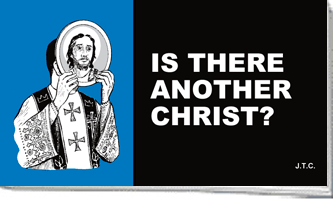
Is There Another Christ?
Have you ever been lied to? Millions have, trusting in "another Christ" to save them. The gospel for Roman Catholics.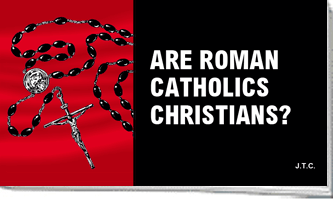
Are Roman Catholics Christians?
Show Catholics that neither their good works nor their religion can save them.
Camel's In The Tent
Islam is trying to take over! See where it came from, and where it is going.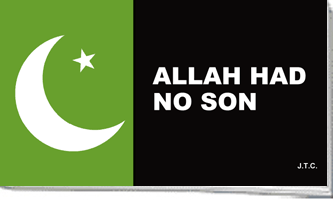
Allah Had No Son
Here's proof that Allah and the God of the Bible are not the same.-
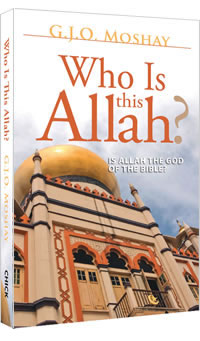
Who Is This Allah?
256 pages
Islam is a religion without redemption, because it has a god who does not love mankind. Moshay PROVES that Allah and the God of the Bible are not the same. -
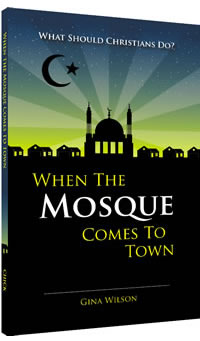
When The Mosque Comes To Town
128 pages
What should a Christian do when the Mosque comes to town? Read a free excerpt here.