
City Prepares for a Dead Man
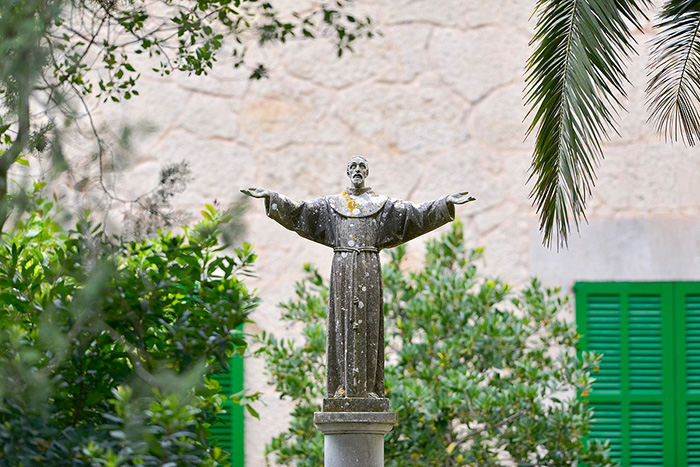
In the medieval hill town of Assisi, Italy, Catholic officials have opened a glass case and invited the world to come look inside. Inside are the bones of Francis of Assisi.
Hundreds of thousands of people are flocking from around the world to see a skeleton in a glass case. Nearly 400,000 visitors have already registered for the viewing, and officials expect the number to reach half a million before the exhibition closes on March 22.
Four hundred volunteers have been recruited to manage lines. Shuttles are employed to deal with the influx along the narrow, cobblestone streets. Parking lots outside of the city have been expanded. While millions pass through each year to visit the tomb of Francis, this display is unprecedented.
Franciscan priest Giulio Cesario described the scene as pilgrims entering “an atmosphere of reflection but also of joy… to venerate the mortal remains of Saint Francis and hear him whisper in their hearts a word of goodness.”
Whispers from a corpse? Cardinal Ángel Fernández Artime went even further, calling the veneration of the relics “a strong and concrete invitation” for the faithful to examine their lives and respond spiritually. He then went on to say that the act of saint veneration is, in fact, what Christ would expect his followers to do.
This is blatant sacrilege framed in polished, ecumenically driven language meant to draw thousands into its folds. And it’s working. Thousands of people kneel, bow, and pray to a dead man.
Even the recently canonized youth saint Carlo Acutis draws crowds of teenagers and Latin American visitors. Brother Marco Moroni, custodian of the monastery where both are buried, says the interest in Acutis and Francis overlaps, creating a “growing movement” of saint devotion.
What’s really behind all the religious discussion of saint veneration? Cold, hard cash.
Assisi is built for this. Medieval streets funnel pilgrims toward the basilica. Giotto’s frescoes depict the saint’s life. Shops along the route sell Saint Francis mugs, rosaries, and T-shirts. Religious tourism drives the local economy.
Shopkeeper Arianna Catarinelli owns a store that sells sweatshirts with Assisi’s face on them, along with mugs, rosaries, and assorted saint paraphernalia. Naturally, she stated, “But for businesses, I think it’s positive that there are so many people.”
Bank employee Riccardo Bacconi added that living in Assisi requires accepting the crowds, which have “more advantages than disadvantages” for the city, economically speaking. He readily acknowledged that the town lives on tourism – Catholic saint worship tourism, that is.
By the end of March, a million people are expected to file past a skeleton. Kneeling. Praying. Buying devotional items. Walking away with the mistaken idea that bones of a dead man somehow carry spiritual power.
Rome is not just responsible for this mistake, but it does everything in its power to push the concept until literal merchandise is made of relics and relic worship. It’s ultimately a grab for money and power — two things the Catholic organization has sought since its inception. Unfortunately, for the thousands who bow their head under the pope’s leadership, it’s working.
They are held riveted by the thought that confession, penance, works, and devotion to the dead can assuage their guilt, pardon some of their sin, and one day get them into heaven after untold years in purgatory. They are held in bondage when the free gift of grace offered by Christ alone is only one prayer away.
Rome tries to appeal to the wider masses with ecumenical language, but the pattern is clear. It will always circle back to saints, relics, bones, and devotion that centers on the departed rather than the living Christ. They will keep their followers in bondage as long as possible to squeeze out every last penny and Satan loves it.
Francis of Assisi is dead. Carlo Acutis is dead. The faithful are alive. And they are being drawn to worship the dead. We must do our part in helping them understand that salvation comes by the acceptance of a free gift through Christ’s death and resurrection alone. No amount of works, veneration, or rosary praying will wash away the stain that only Christ’s blood can wipe clean.
- See more articles on related topics:
- Catholicism
- False Religions
- Satans Deception
- Idolatry
- Counterfeit Church
- Prayer to Mary and Saints
Products of interest:
-
Are Roman Catholics Christians?
Show Catholics that neither their good works nor their religion can save them. -
Is There Another Christ?
Have you ever been lied to? Millions have, trusting in "another Christ" to save them. The gospel for Roman Catholics. -
Last Rites
When this Catholic dies, he learns that his church couldn't save him. -
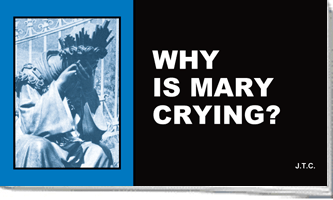
Why Is Mary Crying?
Devotion to Mary doesn't please her. It breaks her heart. -
Answers To My Catholic Friends
64 pages
A gentle witness you can give Catholics that deals with venerating images, purgatory, where popes go when they die, and more. -
50 Years in the Church of Rome
368 pages
This classic work shows how this priest began to question Catholic teachings until he became saved, and led his entire parish to salvation. -
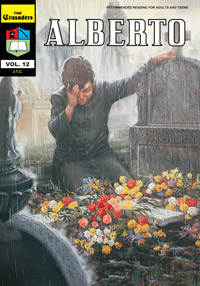
Alberto
32-PAGE, FULL COLOR COMIC BOOK - Alberto Series Part 1 - Here is how Alberto, as a Jesuit, helped destroy churches and ministries. But as he read the Scriptures, he saw that Catholicism couldn’t save.
-
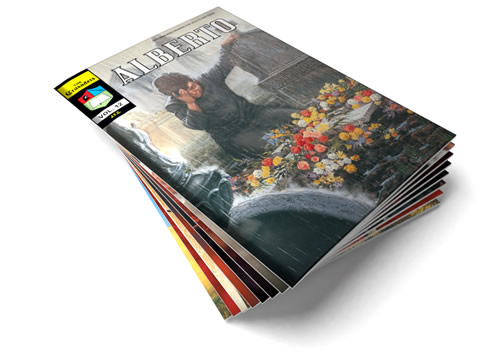
Alberto Series Comic Pack
Read the full story, in 8 full-color comics, of former Jesuit Priest, Alberto Rivera, reveals many of Rome's most closely guarded secrets. Also includes two more 64-page titles: "Big Betrayal" and "Jesuits".
-
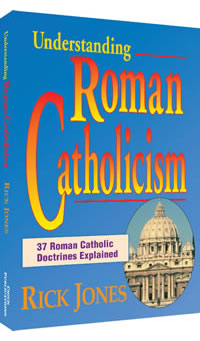
Understanding Roman Catholicism
224 pages
37 Catholic doctrines from the current Catechism are compared with the Scriptures. They're not Christian!