
Teaching Truth Isn’t Enough: Kids Need to Know Why They Believe

For one father, a routine evening homeschool co-op pickup quickly turned into an event that left him stunned. While parents chatted, kids talked, and cars idled, his 13-year-old daughter approached a former close friend she hadn’t seen in several months.
Their friendship had once been easy—built on shared time, trust, and common ground. But over time, something had changed. For one, the other girl had begun openly sharing that she was attracted to other girls.
The overheard conversation was not a carefully planned discussion. It was a concerned teenager, trying to express what she believed about God, truth, and right and wrong. Her words came out imperfectly, the conversation grew emotional, and voices rose.
Then the other girl said something that shut her friend down in an instant. When challenged by the truth that God created marriage for one man and one woman, the friend hotly retorted, “The Bible was written by men!”
Then other girls nearby—peers from the same co-op—told the girl who was trying to defend the Bible to back down because it was making them all uncomfortable. The tension, more than the topic itself, became the problem.
In a matter of minutes, the dynamic flipped. The girl who spoke up found herself on the outside. She was confused, shaken, and trying to understand why expressing what she believed had created friction with her peers, many of whom said they believed the same thing that she did.
Moments like this are becoming increasingly common, even in spaces many families assume are safe from wider cultural influences. Parents who once believed that conversations like the one above could be delayed are finding that those assumptions are no longer valid. Questions around identity, truth, and belief are surfacing earlier—and often in informal, unscripted settings like friendships and casual conversations.
“It doesn’t wait,” one parent reflected after the incident. “You think you have more time. You think you can prepare them first. But the conversations are already happening.”
That reality is forcing a growing number of families to reconsider how they prepare their children—not just in what they teach, but in how deeply they teach it.
For many, the focus has traditionally been on clearly defining right and wrong—passing down values, teaching Scripture, and setting boundaries. Those things remain central. But as this moment illustrated, that may not be enough on its own.
In the parking lot exchange, the teen who spoke up had conviction. She knew what she believed. But when her friend challenged the authority of the Bible, the conversation stalled because she didn’t know why she believed.
“She had the truth,” her father remarked. “But she didn’t yet have the framework to explain it or defend it in a way that made sense in that moment.”
That question is exactly what many parents are now wrestling with.
Parents do not need to turn their children into professional debaters or theologians. But kids do need simple, understandable answers that help them think clearly under pressure. Here’s one simple response she could have given:
"God is powerful, so why couldn't he use people who loved him to write his message?"
She could then add that the Bible contains hundreds of fulfilled prophecies and has repeatedly been shown to be historically accurate.
It's also important that kids understand objections like these often come down to a different issue entirely. In many conversations, the real issue is not whether the Bible was written by men, but whether someone wants the Bible to have authority over their life. Recognizing that can help young believers respond calmly instead of becoming defensive or overwhelmed.
The distinction between knowing what to believe and understanding why is critical in our culture. Many kids are encountering pushback they’re not equipped to process. A simple statement like “that’s wrong” can quickly unravel when met with questions about authority, fairness, or personal experience.
Experts, educators, and parents alike are discovering first-hand the importance of helping young people develop a better framework for their beliefs. That includes not only teaching Scripture, but also addressing common objections, explaining the reasoning behind moral claims, and preparing them for the reality of disagreement. It means equipping kids to navigate complex issues without the oversight of a parent or teacher present and doing so confidently.
For the teens in the parking lot, the conversation ended with confusion. Their friendship was all but ended. And the cost of speaking up became immediately tangible.
For the parents watching, the takeaway was clearer. “It showed me that teaching them what’s true isn’t enough by itself,” her father said. “They have to understand why it’s true—before they’re put in a position where they have to explain it.”
As more families encounter similar moments, that realization is beginning to shape a shift in approach—one that prioritizes passing on beliefs and helping children understand the whys and wherefores behind them. Because as the brief homeschool exchange made clear, those conversations aren’t on the horizon. They’re already here.
And that’s where Chick tracts, comics, and books come in. These resources give young people clear, convictional answers rooted in Scripture. Your kids don’t have to be caught off guard when moments arrive like the story above. Help them get ready to stand for truth with both confidence and understanding.
- See more articles on related topics:
- For Christians
- Older Children and Adults
- Bible
- Other Subjects
- Children
Products of interest:
-
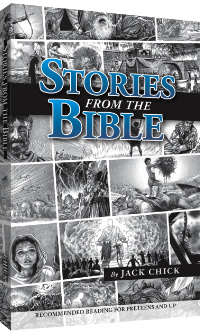
Stories from the Bible
176 pages
These beautiful illustrations help tell the true stories of some of the biggest Bible figures. You'll get a fresh mental picture of what it was like for these heroes of the Bible. -

King of Kings
64-PAGE, FULL COLOR COMIC BOOK - Teaches many major Bible stories, from Genesis to Revelation.
-

It's All About You!
Two "someones" are watching you. And one has it in for you. Now, you have a decision to make. -
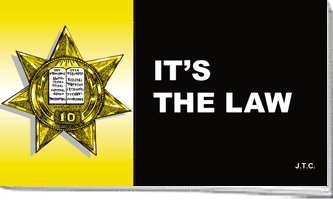
It's The Law
The Ten Commandments ... no one can obey them perfectly. That's why we need Jesus. -

One Heartbeat Away
254 pages
You died. Now what? Is there anything out there after we take that last breath? -
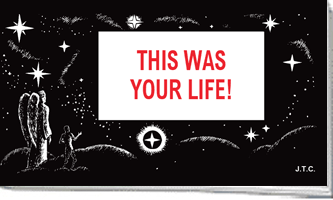
This Was Your Life
Most Popular Chick Tract! Everything you've said or done will be played back at judgment. Are you in the Book of Life?